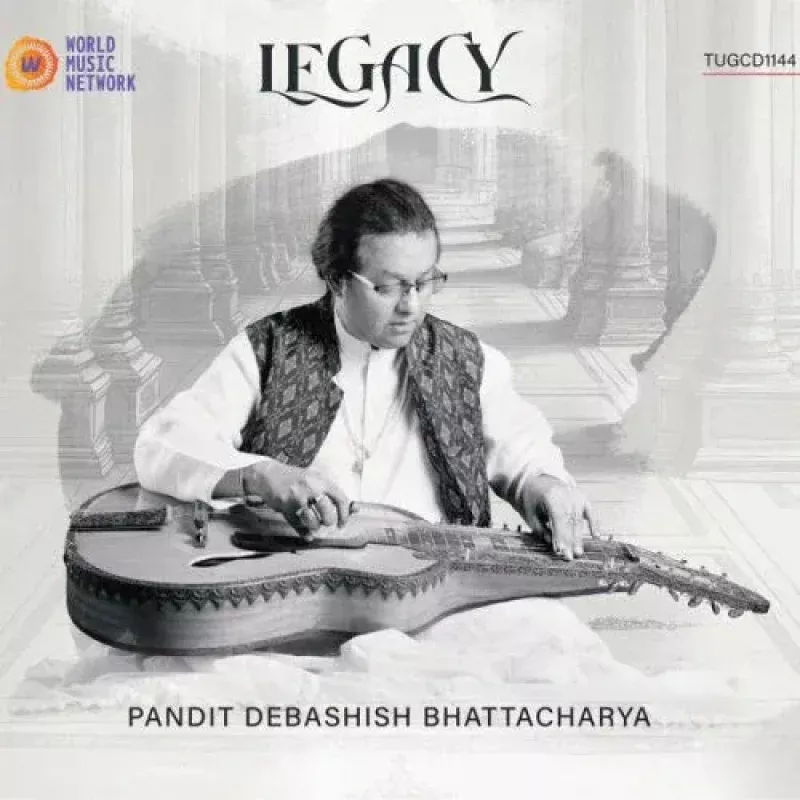
On his most recent tourof North America, Debashish played across 24 cities in 2 months, sharing the stage with hisdaughter Anandi Bhattacharya. The results of these concerts were both cathartic andemotional for Debashish.
The tour and album was initially meant to pay tribute to the pioneering Indian recordingartists of the early 1900s. This generation of musicians made history when they set classical Indian music to record for the first time. Early primitive manufacturing of Shellac 78rpm discs captured renditions of Indian ragas and popular songs making this music accessible to a wider populace, creating a sensation that eventually grew into one of the most influential genres in not just world music but western music too.George Harrison (The Beatles) and Brian Jones (The Rolling Stones) both were inspired by Indian instruments, sounds and textures and translated that into their own popular music when working with their respective groups. The former even travelled to Mumbai in the late 60s a soundtrack for a film called Wonderwall at the world famous HMV Studios.
Together with the likes of Ravi Shankar and Bhimsen Joshi, Indian classical music has helped to inspire so many musicians all over the world and remains incredibly relevant to this day. Debashish wanted to honour that journey by taking one himself. As father and daughter moved from town to town Debashish recalls that the tour assumed a kind of heartfelt pilgrimage of family, music and connection to nature.
This was something much more important than the composition alone but a celebration ofgratitude and life. The torch was now passed on and the musical bond that had connectedthe generations of his family was reignited once again.
This album Legacy is a culmination of all those things and a homage to the history oftraditional Indian music and the teachings that Debashish has learnt throughout his career.